DIY Bubble Solution: The Recipe That Works on the First Try
To make a reliable DIY bubble solution, gently stir together 6 cups of water, 1 cup of liquid dish soap and 2 tablespoons of glycerin. That works out to about 1 part soap to 6 parts water. Light corn syrup can stand in for the glycerin. Let the mix rest for 24 hours before you use it. Your water, your soap and the weather matter most.
Soap and water alone will make bubbles you can use right away. The resting time and the glycerin or corn syrup are what turn quick-popping bubbles into bigger, longer-lasting ones. Below you’ll find the basic recipe, versions with and without glycerin, a giant-bubble formula, how to make wands and a troubleshooting table.
What Can You Use as a Bubble Solution?
A bubble solution needs three things. Water makes up most of it, a surfactant (dish soap) forms the film, and an additive slows evaporation and makes the film stronger. A surfactant is a substance that lowers water’s surface tension, which lets water stretch into a thin skin instead of snapping back into drops.
- Water. Distilled water works best. Hard tap water has minerals that can weaken the soap film. Regular tap water is fine for a first batch.
- Dish soap. Plain liquid dish soap such as Dawn or Joy is the standard. Skip formulas with added lotion or other “extras,” because they tend to make weaker bubbles.
- Glycerin. Vegetable glycerin draws in moisture and slows evaporation. Since drying is what thins a bubble wall until it pops, slower drying means longer-lasting bubbles. Look for it in the pharmacy or skin-care aisle or in cake-decorating supplies.
- Light corn syrup or sugar. These are kitchen substitutes for glycerin. They thicken the film and slow drying, though not quite as well as glycerin, and the solution can get sticky.
Easy DIY Bubble Solution Recipe (Step by Step)
This basic recipe makes about 7 cups, enough to fill a few dollar-store bubble bottles and a tray for big wands.
Ingredients
- 6 cups (1.4 liters) water, distilled if possible
- 1 cup (240 ml) liquid dish soap
- 2 tablespoons (30 ml) vegetable glycerin, or ¼ cup (60 ml) light corn syrup
- A large container with a lid, a long spoon and a shallow tray for dipping
Steps
- Add the water first. Pouring the soap in after the water keeps foam to a minimum.
- Pour in the dish soap slowly. Hold the bottle close to the surface so it doesn’t splash.
- Add the glycerin or corn syrup. If you’re using corn syrup, dissolve it in a cup of the warm water first so it mixes evenly.
- Stir gently. Use slow strokes and don’t whisk. Foam on top pops bubbles before they can form.
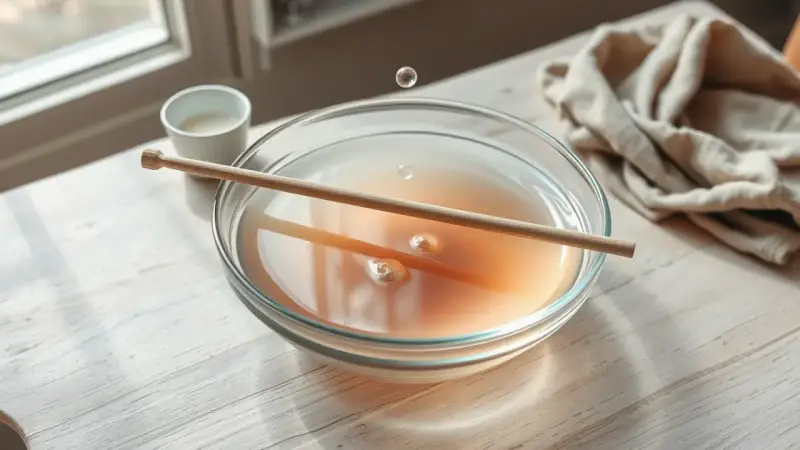
- Cover and rest for 24 hours. Resting lets the ingredients blend fully and lets the trapped air rise out. Bubbles are noticeably stronger the next day.
- Skim off any foam and pour into a tray. A baking sheet, paint tray or plastic tub works well for big wands.
Best Homemade Bubble Solution Recipes Compared
Which homemade bubble solution is best depends on what you want: bubbles right now, the strongest bubbles from kitchen staples, or giant bubbles you can walk around. All of these recipes use about 1 cup of dish soap so you can compare them easily.
| Recipe | Water (cups) | Dish soap (cups) | Additive | Rest time | Best for |
|---|---|---|---|---|---|
| Quick, no additive | 6 | 1 | None | None needed | Toddlers, instant play |
| Glycerin (recommended) | 6 | 1 | 2 tbsp glycerin | 24 hours | Longest-lasting everyday bubbles |
| Corn syrup (no glycerin) | 6 | 1 | ¼ cup light corn syrup | 24 hours | Pantry-only version |
| Sugar (no glycerin or corn syrup) | 6 | 1 | 2–3 tbsp sugar dissolved in warm water | 24 hours | When the cupboard is nearly bare |
| Giant bubble | 12 | 1 | ½ cup cornstarch, 1 tbsp baking powder, 1 tbsp glycerin | At least 1 hour, ideally overnight | Big wands and string loops |
If you’d rather use castile soap, a plant-based version is 2 cups water, 1 cup liquid castile soap and ½ cup glycerin. Expect softer, shorter-lived bubbles than you’d get from dish soap. Leave out essential oils if young children will play with it, since they can irritate eyes and skin.
Do You Need Special Bubble Solution for Giant Bubbles?
Yes. Giant bubbles need a stretchier solution than regular bubbles. Plain soap-and-glycerin films break when you pull them several feet wide. Thickeners such as cornstarch help the film hold together. Hobbyists who make huge bubbles often use a polymer instead, like guar gum (sold as a baking thickener) or a water-based lubricant.
Kitchen giant bubble recipe: Whisk ½ cup (about 65 g) cornstarch into 12 cups (2.8 liters) warm water until no lumps remain. Then stir in 1 tablespoon baking powder, 1 tablespoon glycerin and, last, 1 cup dish soap, gently. Let it rest for at least an hour. Stir slowly before each use because cornstarch settles to the bottom.
Giant bubbles depend on the weather as much as the recipe. They do best in humid, cool, still air, such as early morning, evening or right after rain. Hot, dry or windy afternoons pop them fast.
How Do You Make Bubble Wands?
A bubble wand only needs a loop that holds a film of solution. Absorbent material like cotton string or yarn holds more solution than bare plastic or wire, so you get bigger bubbles.
- Pipe cleaner wand. Twist one end into a circle, heart or star and leave the rest as a handle. The fuzzy surface holds solution well, which makes this a good choice for preschoolers.
- Straw or funnel blower. Dip the wide end of a kitchen funnel or a cut drinking straw and blow gently through the other end.
- Giant string wand. Tie 3 feet (about 1 m) of cotton string between the tips of two dowels or sticks. Then tie a longer piece of about 6 feet (about 2 m) between the same two tips so it hangs in a loop. A metal washer slid onto the long string helps it hang open. Dip the string, lift it, and walk backward slowly or let the breeze fill it.
- Hanger wand (adult help). Bend a wire coat hanger into a hoop and wrap it with yarn. An adult should bend the hanger and tape or cover the cut ends, which can be sharp.
How to Make a Large Amount of Bubbles
To make a large amount of bubbles for a party or classroom, scale the basic recipe by the same 1-to-6 ratio. For example, 1 gallon (16 cups) of water takes about 2⅔ cups of dish soap and about 5 tablespoons of glycerin. Mix it in a clean bucket the night before.
- Use shallow trays. Several baking sheets or paint trays let more kids dip at once and limit spills.
- Try a bubble “snake.” Stretch a clean sock over the cut end of a plastic bottle, dip it and blow through the mouth of the bottle to push out a long foam tube. Remind kids to blow out, not breathe in.
- Bounce them. Glycerin-rich bubbles can bounce off cotton or knit gloves, because dry fabric doesn’t break the film the way oily, damp skin does.
Typical cost: a full batch from household supplies usually runs a few dollars. A small bottle of glycerin is the main extra expense, and prices vary by store.
Troubleshooting Homemade Bubble Solution
| Problem | Likely cause | Fix |
|---|---|---|
| Bubbles pop instantly | Solution too fresh, or air too dry or hot | Rest it 24 hours. Blow bubbles in shade or on a humid day. |
| No film forms on the wand | Too little soap | Add dish soap a few tablespoons at a time. |
| Thick foam, few bubbles | Stirred too hard, or too much soap | Skim the foam, add water and stir gently from now on. |
| Weak bubbles with tap water | Hard water minerals | Remake it with distilled water. |
| Sticky residue on hands | Too much corn syrup or sugar | Add water, or switch to glycerin. |
| Giant bubbles tear early | Cornstarch settled, or the wind is too strong | Stir slowly before each dip. Move slowly and wait for calmer air. |
| Cloudy or sour-smelling solution | Spoilage from sugar or starch | Throw it out and make a fresh batch. |
Safety, Storage and Gifting
- Not a drink. Homemade bubble solution can look like juice or lemonade, especially in a jar. Label every container “Bubbles — do not drink” and store it out of reach of toddlers.
- Eyes and floors. Soap stings, so rinse eyes with clean water if bubbles splash. Spilled solution makes decks, tile and patios slippery, so play on grass when you can.
- Storage. Keep the solution in a lidded jar or bottle at room temperature. Glycerin versions keep for weeks. Sugar, corn syrup and cornstarch versions are best used within a few days, and any batch that looks cloudy or smells off should go.
- Giftable version. Pour the solution into a mason jar, tie a pipe-cleaner wand to the lid with ribbon and add a tag listing the ingredients with the do-not-drink warning. If you plan to sell homemade bubbles, check your state’s rules for children’s products first.
FAQ
– What is the best homemade bubble solution without glycerin?
The best homemade bubble solution without glycerin uses light corn syrup: 6 cups water, 1 cup dish soap and ¼ cup corn syrup, rested 24 hours. Corn syrup slows evaporation the way glycerin does, though a little less well. Granulated sugar dissolved in warm water is the next-best backup.
– How do you make bubbles without glycerin or corn syrup?
To make bubbles without glycerin or corn syrup, mix 1 part dish soap with 6 parts water, ideally distilled. Dissolving a few tablespoons of sugar in warm water first will make the bubbles stronger. Without any additive, the bubbles work fine but pop sooner.
– How long should bubble solution sit before using?
Bubble solution should sit for about 24 hours for the best results. You can use it right away, but resting lets the foam settle and the ingredients blend, which gives you bigger, longer-lasting bubbles. Giant bubble recipes with cornstarch need at least an hour.
– Can you use any dish soap for bubbles?
Most liquid dish soaps make bubbles, but plain formulas like Dawn or Joy tend to give the strongest film. Soaps with added lotions or moisturizers usually make weaker bubbles. Hand soap and laundry detergent are less dependable and harsher on skin.