Can You Freeze Bagels? How to Freeze, Store and Reheat Them
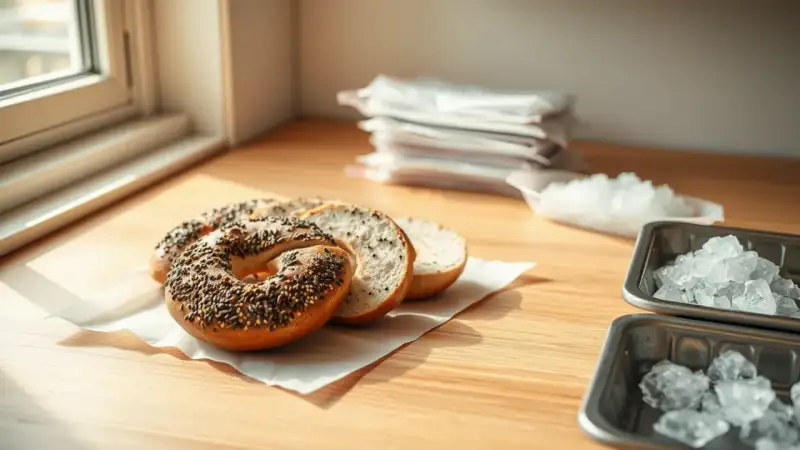
Yes, you can freeze bagels, and they keep their best quality for up to 3 months at 0°F (-18°C). Slice each bagel in half, separate the halves with parchment paper and seal them in a freezer bag with the air pressed out. Then toast the halves straight from frozen. Bagels last only 1 to 2 days on the counter, and the refrigerator makes them go stale faster.
Freezing slows staling almost to a stop, and it works the same way for store-bought, bakery and homemade bagels, including sourdough.
How long do bagels last on the counter, in the fridge and in the freezer?
Fresh bagels last 1 to 2 days on the counter at their best and about 3 months in the freezer. A bagel kept frozen at 0°F stays safe to eat indefinitely, but its texture and flavor fade after about 3 months.
| Storage | How long it keeps | Notes |
|---|---|---|
| Counter (room temperature) | 1–2 days at best quality; up to 4–5 days | Plain bagels only. Keep them in a paper bag or a bread box. Throw them out if you see mold. |
| Refrigerator (40°F/4°C or below) | Up to 1 week, but they go stale faster | Only for bagels with perishable fillings such as cream cheese, lox, egg or deli meat. Eat those within 1 to 2 days. |
| Freezer (0°F/-18°C) | Up to 3 months for best quality | Safe indefinitely when kept frozen. Freezer burn and dryness build up after about 3 months. |
| Store-bought, sold frozen | Follow the package date | Follow the package directions for storage and toasting. |
Why the fridge makes bagels worse: staling isn’t just drying out. The starch in the bagel recrystallizes, which makes it firm and leathery, and this happens fastest at refrigerator temperatures, just above freezing. Freezing at 0°F almost stops it.
How to freeze bagels so they don’t stick together
The best way to freeze bagels is to slice them, put parchment between the halves and seal them airtight within a day of buying or baking them. Here are the 6 steps:
- Freeze them fresh. Freeze bagels the day you buy them or by day two at the latest. Freezing holds a bagel in the condition it’s in, so a stale bagel comes out stale.
- Cool homemade bagels completely. Let them cool on a rack for at least 1 hour. If they’re still warm, steam gets trapped in the bag and turns into ice crystals and soggy spots.
- Slice before freezing. Cutting a frozen bagel is hard and risky. Pre-sliced halves go straight into the toaster.
- Separate the halves. Put a small square of parchment or wax paper between the halves, or between whole bagels, so you can pull out one at a time.
- Wrap airtight. Use a heavy-duty zip-top freezer bag, which is thicker than a storage bag. Press out as much air as you can, or close the bag around a straw, suck out the last bit of air and seal it fast. A vacuum sealer works best for storage of 2 to 3 months. Air in the bag causes freezer burn, which shows up as dry, pale patches.
- Label and date. Write the flavor and date on the bag so you use the oldest bagels first and stay within 3 months.
Extra tip for big bagels: to make thinner pieces that toast evenly, cut the bagel crosswise into two half-moons. Then slice each half-moon open, leaving a small hinge so it stays together. The thinner pieces thaw and crisp in one toaster cycle.
Freezing a whole bag at once? Lay the sliced, separated bagels flat on a sheet pan and freeze them uncovered for 30 to 60 minutes until firm. Then bag them. Bagels that are already firm won’t fuse into a block.
How to reheat frozen bagels
The fastest way to reheat a frozen bagel is to put the frozen halves straight into the toaster, with no thawing needed. Plain bagels aren’t perishable, so you can also thaw them on the counter for 30 to 60 minutes. Bagels with cream cheese, meat or egg must thaw in the refrigerator, not on the counter.
- Toaster (best for sliced halves). Use a medium-high setting or the “frozen” button. Thick bagels may need a second, shorter cycle.
- Oven (best for whole bagels). Mist or quickly rinse the frozen bagel with water, then bake it on the rack at 375°F to 400°F (190°C to 200°C). A whole bagel takes about 10 to 15 minutes and halves take about 5 to 7. The water turns to steam and brings back a crisp, shiny crust.
- Air fryer. Heat halves at 320°F to 350°F (160°C to 175°C) for 3 to 5 minutes. Check early, because sesame and everything toppings burn quickly.
- Microwave (soft, not crisp). Wrap the bagel in a damp paper towel and heat it for 30 to 60 seconds. Eat it right away, because a microwaved bagel turns tough and chewy as it cools.
A frozen bagel sandwich with egg, sausage or other cooked meat should be reheated until it’s steaming hot all the way through, to 165°F (74°C).
What changes when you freeze bagels, and how to fix it
A frozen bagel that was wrapped well tastes nearly fresh once it’s toasted. A few things can still change:
- The crust goes soft. Moisture moves outward as the bagel thaws. A few minutes in a hot oven, or a quick water mist before baking, crisps it again.
- Toppings fall off. Seeds, onion and garlic flakes come loose in the bag. Shake them out onto the cut side before toasting.
- The bagel dries out or gets freezer burn. This comes from too much air in the bag or more than about 3 months in the freezer. Mildly freezer-burned bagels are safe to eat, so toast them or turn them into bagel chips or croutons.
- Fillings don’t freeze well. Cream cheese turns crumbly and watery, and lettuce and tomato go limp. Freeze bagels plain and add spreads after reheating.
Can you freeze homemade bagel dough to bake later?
Yes, but for homemade bagels, the most reliable way is to bake them fully, cool them and freeze them as described above. Freezing raw dough is harder. Yeast weakens in the freezer, and dough that thaws unevenly can boil up flat.
If you want to freeze the dough, shape the bagels and freeze them on a parchment-lined tray before boiling. Bag them once they’re solid. Thaw them in the refrigerator overnight, let them sit at room temperature until slightly puffy, then boil and bake as usual. Use frozen dough within about 1 month for the best rise.
Common mistakes when storing bagels
- Putting plain bagels in the fridge. The fridge stales them faster than the counter does. Use the counter for 1 to 2 days and the freezer after that.
- Freezing them whole and unsliced. You’ll need to thaw a whole bagel before you can cut it, and cutting a frozen bagel is how knives slip.
- Using the thin bag from the bakery. Paper and thin plastic bags let in air and freezer odors.
- Freezing day-four bagels. Freezing doesn’t undo staleness, so freeze early.
- Leaving cream cheese bagels out. Follow the 2-hour rule. Perishable fillings shouldn’t sit at room temperature for more than 2 hours, or 1 hour above 90°F (32°C).
How to tell if a bagel has gone bad
A bagel has gone bad if it shows mold, smells off or feels damp and slimy. Check for these signs:
- Visible mold. Look for fuzzy spots that are white, green, blue or black. Throw out the whole bagel, and any bagels touching it, because mold roots spread through soft bread beyond what you can see.
- Sour or musty smell. An odd smell that isn’t from the toppings means it’s time to toss the bagel.
- Damp or slimy texture. This often comes from bagels sealed in plastic while still warm.
- Rock-hard and dry. This is staling, not spoilage. Stale bagels are safe to eat but are better as chips or bread crumbs.
When in doubt, throw it out. Never taste a bagel to check whether it’s safe.
FAQ
– Is it better to store bagels in a paper or plastic bag?
A paper bag is better for bagels you’ll eat within 1 to 2 days, because it lets the crust breathe and stay chewy. Plastic keeps bagels soft longer, but the crust turns leathery and trapped moisture can speed up mold. For anything longer than 2 days, use a freezer bag in the freezer.
– How quickly do bagels go bad?
Plain bagels taste best for 1 to 2 days at room temperature and usually mold or go very stale within about 4 to 5 days. Warm, humid kitchens shorten that. Bakery bagels without preservatives go stale faster than packaged supermarket bagels, so check the package date on store-bought ones.
– How do you keep bagels from molding?
The surest way to keep bagels from molding is to freeze them within a day of buying them. On the counter, keep them in a cool, dry spot away from the stove and dishwasher. Never seal warm bagels in plastic.
– How do you store homemade sourdough bagels?
Store homemade sourdough bagels the same way as other bagels: in a paper bag on the counter for 1 to 2 days, or sliced and frozen for up to 3 months. Sourdough’s natural acidity can slow mold slightly, but it doesn’t stop staling. Cool them completely before bagging.
– Can you refreeze bagels after thawing?
Yes, you can refreeze plain bagels that were thawed at room temperature or in the fridge. Each freeze-thaw cycle dries them out more, though. To avoid refreezing, thaw only the halves you plan to eat.