Preschool Play with LEGO DUPLO: Build a Shop That Becomes Anything
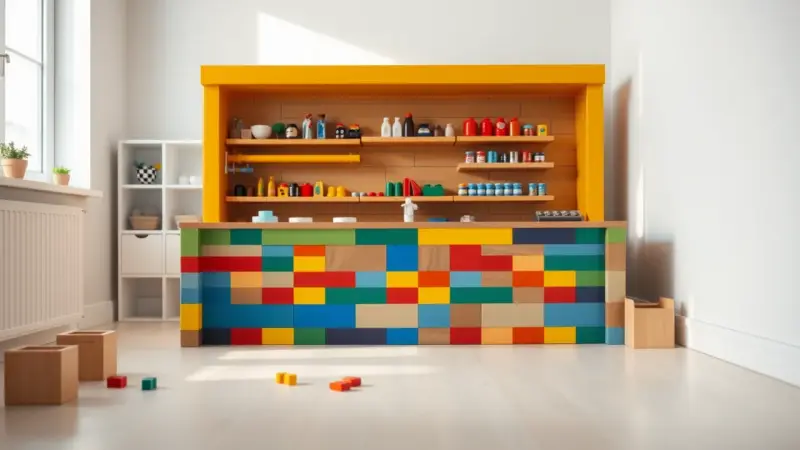
A small brick counter, a few shelves stacked with tiny groceries and a figure waiting behind the register: this is a DUPLO shop, and it’s one of the easiest pretend-play setups for a preschooler. The same bricks can become a pantry at home, a drive-thru window or a bakery by the end of the afternoon.
Big, chunky bricks suit this kind of play. LEGO says its DUPLO bricks are twice the size of LEGO system bricks and made for small hands. That means a preschooler can build, knock down and rebuild without frustration, and the pieces hold up better than a cardboard box.
Where this play fits
LEGO suggests DUPLO from about 18 months, and its preschool building activities run up to age 5. Pretend play with different roles really takes off around ages 3 to 4, when children start inventing characters and whole storylines. A shop setup suits that stage well, because it comes with built-in jobs: shopkeeper, customer, delivery driver.
It works on a rainy afternoon, as a quiet-time activity or as a corner of the playroom that stays set up for a few days. Children who love dressing up and decorating boxes often enjoy this as a sturdier, tidier alternative. There’s no costume laundry afterward.
How to set up a brick shop
- Pick a spot. A low table or a rug corner gives plenty of room. A flat green or gray building plate keeps the base steady if you have one.
- Start with a counter. Let your child stack a long row of bricks to make it. Ask where the customers will stand and where the cash register goes.
- Add shelves. Build two or three short towers and lay flat bricks across them. Fill them with whatever small pieces you have, such as food-shaped bricks, animals or plain colored blocks that stand in for cans and boxes.
- Bring in the people. Figures or small dolls become the shopkeeper and the shoppers. If you have none, a stacked brick “person” with a face drawn on a sticky note works fine.
- Offer a story starter. Try “The shop is out of strawberries. What should we do?” or “A dragon wants to buy bread.” Then step back and let the story run.
- Rebuild it. After a while, suggest turning the shop into something else. A pantry needs shelves with a door. A drive-thru needs a window and a road.
Ideas for changing the setup
- Grocery store: sort the items by color or type, then “pay” with paper coins.
- Home pantry: have a character unpack the shopping and put each item on a shelf.
- Drive-thru restaurant: build a long lane for toy cars and a window for handing out orders.
- Princess market or dragon cave: add a story and the same bricks take on a new life.
Mistakes to avoid
- Taking over the build. The best part is the child’s own version, even if the shelves lean. Offer ideas as questions rather than corrections.
- Putting out every brick. A huge pile can overwhelm. Start with a small handful and add more as the story grows.
- Keeping the build too precious. Part of the fun is taking it apart. Rebuilding is where much of the new storytelling happens.
- Mixing in small parts around very young children. Keep regular small LEGO pieces and other tiny items away from children under three, and watch younger siblings during play.
- Skipping the story. A quick question or two from an adult, such as “Who is shopping today?”, often keeps a preschooler’s play going far longer than a finished build does.