How to Cast On Knitting: 3 Easy Methods for Beginners
To cast on in knitting, tie a slip knot on one needle, then add stitches until you have the number your pattern calls for. The easiest method for beginners is the knitted cast-on, which needs no yarn-tail measuring. The long-tail cast-on gives a stretchier, neater edge for most projects.
What do you need to cast on?
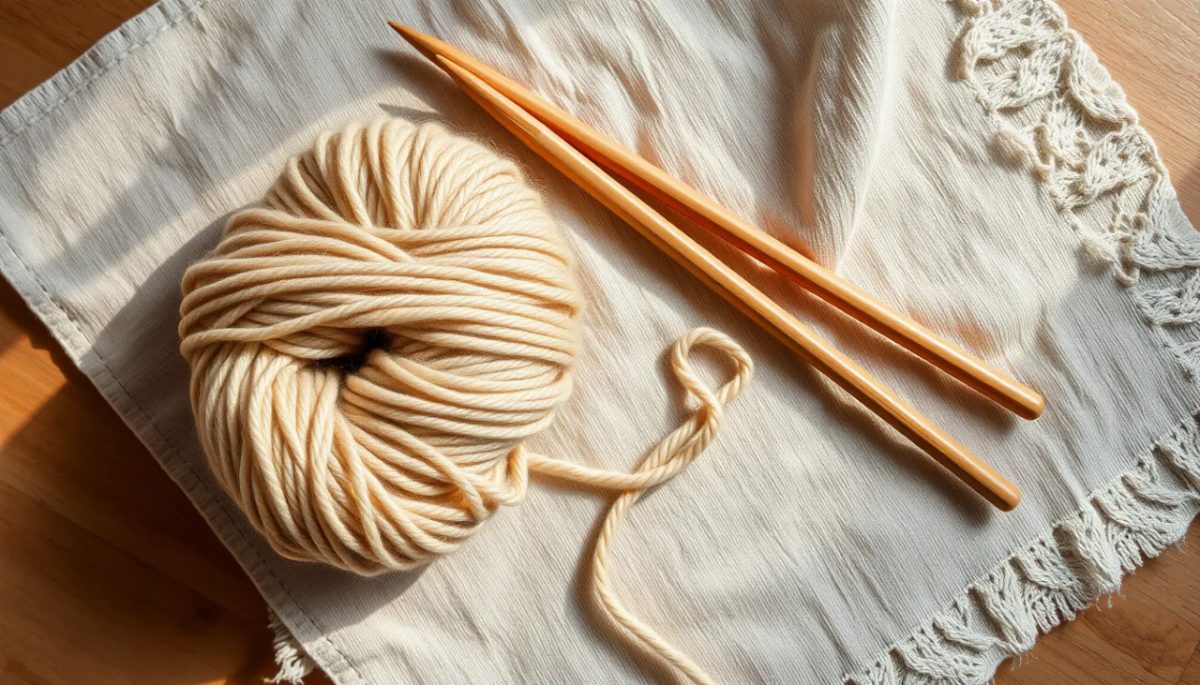
- Yarn: smooth, light-colored worsted weight is easiest to see.
- Needles: a pair in the size on the yarn label, usually US 8 (5 mm) for worsted.
- Scissors to cut the yarn.
Difficulty: easy. Time: about 5 to 10 minutes for your first 20 stitches, faster with practice. No knitting needles yet? Two smooth wooden dowels or chopsticks with sanded tips work for practice; avoid sharp pencils.
How do you make a slip knot?
A slip knot is an adjustable loop that becomes your first stitch. Every method below starts with one.
- Make a loop in the yarn, leaving a tail of about 6 inches (15 cm).
- Reach through the loop and pull up a bight of the working yarn (the strand attached to the ball).
- Slide that bight onto the needle.
- Pull the tail to snug it, leaving the loop loose enough to slide.
How do you do the knitted cast-on?
The knitted cast-on builds each new stitch by knitting into the previous one, so you never guess a tail length. It is best for beginners, though the edge can look a bit loopy.
- Put the slip knot on your left needle.
- Insert the right needle into the stitch from front to back, as if to knit.
- Wrap the working yarn counterclockwise around the right needle.
- Pull the wrap through, forming a new loop on the right needle.
- Slip that loop onto the left needle, twisting nothing, and tug gently.
- Repeat steps 2 to 5 until you have enough stitches.
Want the cable cast-on instead? It is nearly identical, but in step 2 insert the right needle between the last two stitches. The result is a firmer, rope-like edge, good for buttonbands and hems.
How do you do the long-tail cast-on?
The long-tail cast-on uses one needle and both ends of the yarn, giving a stretchy edge that suits scarves, hats and sweaters. You must estimate the tail first.
- Measure a tail about 3 to 4 times the width of your piece, then make a slip knot there.
- Hold the needle in your right hand. With the left hand, put your thumb in the tail strand and your index finger in the working strand, forming a slingshot “V.”
- Insert the needle up through the loop on your thumb.
- Go over the strand on your index finger and pull it back through the thumb loop.
- Release the thumb loop and pull the thumb strand to tighten the new stitch.
- Repeat until you reach your stitch count.
A quick measure: wrap the yarn around the needle once per stitch for 10 stitches, and use that length to estimate the tail for the rest. Add a few inches for safety.
Which cast-on should you choose?
| Method | Difficulty | Stretch | Best for |
|---|---|---|---|
| Knitted | Easiest | Moderate | First projects, adding stitches mid-row |
| Cable | Easy | Low | Firm edges, buttonbands |
| Long-tail | Moderate | High | Scarves, hats, sweaters, socks cuffs |
For socks, a very stretchy edge matters, so choose long-tail or a stretchier variant such as the German twist.
Why is my cast-on too tight or uneven?
Tight cast-on edges usually come from pulling each stitch snug against the needle. Leave a finger’s width of slack between stitches, or cast on over two needles held together, then slide one out.
- Edge curls or looks loopy: knit into the back loop on the first row to tidy it.
- Ran out of tail: start over with a longer tail; unpicking is faster than splicing.
- Stitches twisted: make sure all loops sit the same direction before knitting the first row.
FAQ
– How many stitches should I cast on?
Cast on the number your pattern gives. For a practice swatch, 20 stitches is plenty. Count the slip knot as the first stitch.
– How do you cast off in knitting?
Knit two stitches, then lift the first over the second and off the needle. Knit one more, lift again, and repeat. When one stitch remains, cut the yarn and pull the tail through it.
– Is it easy to learn to knit?
Yes, the basics are quick to learn: casting on, the knit stitch and casting off cover a simple scarf. Expect some clumsy rows at first, which improve with practice.