Ombre Easter Egg Pallet Art
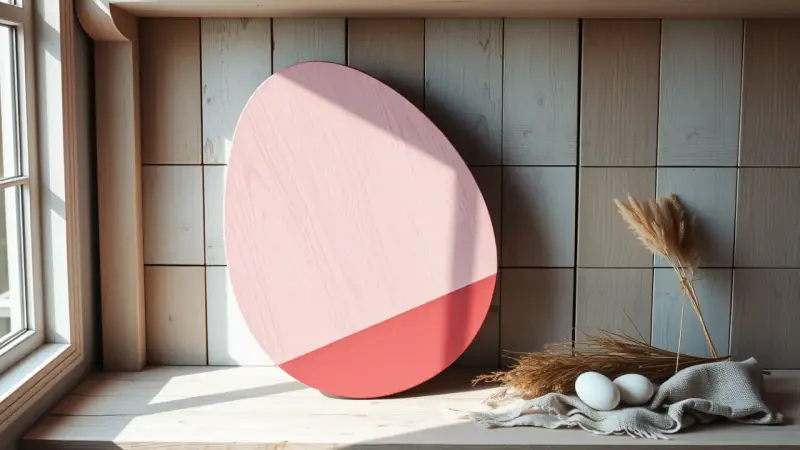
A big egg shape painted in bands of pink that fade from deep rose to soft blush sits against a pale gray-white wood background. That is this ombre Easter egg pallet art. It is a simple painted sign that looks good on a mantel, shelf or entry table all through spring.
The color effect comes from one jar of pink paint and one of white. Each band gets a little more white than the one before it, so the shades step lighter without any special blending skills.
What do you need to make it?
- A wood pallet-style sign or board, painted a gray-white and fully dry
- Pink acrylic or craft paint, plus white paint for lightening
- A pencil and a large egg template cut from paper or cardboard
- Painter’s tape (optional)
- A flat brush, a small round brush, and a palette or paper plate
- Clear sealer if you want a protective finish
How do you paint the ombre egg?
- Paint the board in a gray-white and let it dry completely. Give it a second coat if the wood grain shows through more than you like.
- Trace the egg template on the board in pencil. Center it, or set it a little off to one side for a relaxed look.
- Divide the egg into horizontal bands. Four to six bands work well. Lightly mark the lines with a pencil, or use tape.
- Squeeze out the pink and paint the first band at full strength, at the top or the bottom.
- Stir a small amount of white into the remaining pink and paint the next band. Add more white for each band after that.
- Stop before the last band turns white. The background is already pale, so a nearly white band would vanish and the egg would look unfinished.
- Let the paint dry, then go over the edges with the small brush to clean up the outline. Add a coat of sealer if you like.
How do you get smooth color steps?
Mix all your shades before you start painting. Make them in small cups or on a plate, and line them up from dark to light to check that each step looks even. If two shades look too close, add a bit more white to the lighter one. If the jump is too big, stir in a little of the darker one.
Use the same brush strokes in every band, ideally running the same direction as the wood grain. Thin coats look better than thick ones on rough pallet wood, and a second coat of each shade gives richer color without leaving brush ridges.
Where two bands meet, you can leave a crisp line or lightly drag a dry brush across the seam for a softer blend. Either looks nice. Crisp lines look modern, and soft seams look more like a true gradient.
What can you pair it with?
The egg works well as the anchor of a small Easter display. Fill a mini glass cloche with pastel plastic eggs, and set a framed spring print with a bunny theme beside it. A frame with interchangeable inserts is handy, because you can swap in a different print for the next holiday.
Plastic eggs and a painted sign hold up well in a house with small children who like to touch everything. Keep the display on a shelf or table at a height that suits your household. Small plastic eggs are a choking hazard for children under three, so keep them out of reach.
Can you change the colors?
Yes. Any color you can lighten with white will work. Try these ideas:
- Robin’s-egg blue or mint for a cool palette
- Lavender, which suits a softer, vintage-style look
- Yellow, for a sunny shade that brightens a dark room
- A row of several smaller eggs, each in a different color family
If the background is a deeper color, the lightest band can go closer to white, since it will still stand out. Pale backgrounds need a stopping point at a soft tint, as described above.
Sign size is flexible too. A small board makes a nice shelf piece, and a larger pallet works for a wall or a mantel. Choose the egg size to fit the board, leaving a margin of bare background all around it.