The Weekend Project: Clove-Studded Orange Pomanders
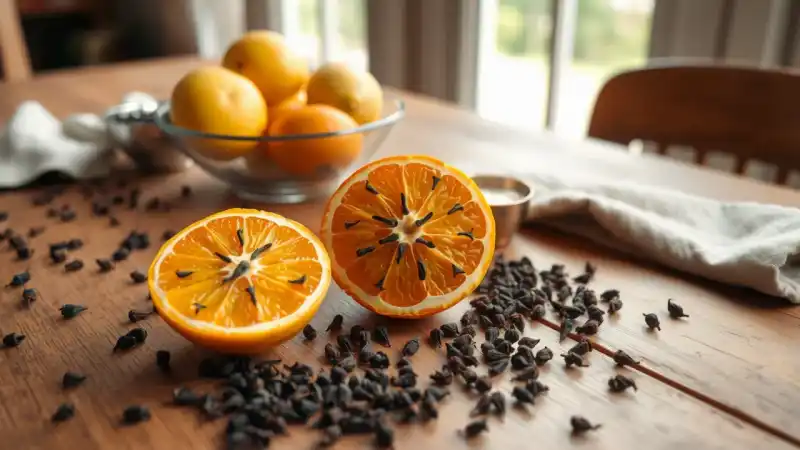
A pomander is a fresh orange or other citrus fruit covered with whole cloves in a pattern. It is usually dried and hung as a scented decoration. The idea goes back to medieval Europe, where people carried pomanders, small perforated balls of fragrant material, for both health and perfume.
The studding takes one sitting. The drying takes weeks, so fruit you start in mid-November is on track to be ready for December. A well-dried pomander lasts 6 to 12 months, and its scent fades slowly over that time.
What You Need for Orange Pomanders
- Fresh oranges. Choose fruit with the tightest skin you can find. Lemons and limes also work well, because their peels hold oils and dry well.
- A jar of whole cloves. Plan on enough to cover each fruit closely.
- A toothpick, skewer or knitting needle for making holes, and a thimble to protect your thumb
- Ground spices for the cure, such as cinnamon, nutmeg and ginger. Orris root is optional: it acts as a fixative and helps absorb moisture.
- Paper bags, one per pomander
- Thin ribbon, if you plan to hang them
Steps and Timing
- Clean the fruit. Rinse off any wax coating with warm water, then dry the fruit completely.
- Plan the design. Spirals, stripes, an all-over dot pattern and initials all work. A ribbon laid on the fruit for a moment can guide straight stripes.
- Pierce and stud. Make a hole first, then push a clove into it. Set the cloves about 1/4-inch apart since the clove orange ball will shrink as it dries. One orange takes an adult about 20 to 30 minutes.
- Coat in spice. Mix the ground spices. Roll the studded fruit in the mix with a spoon until all the bare skin is covered. You can also put the fruit in a paper bag with about 2 tablespoons of the mix and shake it gently.
- Dry. Close the fruit in a paper bag, not plastic, so air can move. Leave it in a dark, dry place for two to six weeks.
- Check that it’s done. A finished pomander is light and sounds hollow when you tap it.
Keeping Pomanders From Molding
How closely you space the cloves matters. Closely-spaced cloves preserve the orange better than widely-spaced ones, and the more of the fruit you cover, the faster it dries. Soft or older fruit is more likely to mold.
Don’t dry pomanders in a humid room, because damp conditions lead to mold. Pick a cool spot with good air flow and turn the fruit as it dries. Hanging pomanders on wire also helps. If mold appears, compost that pomander and start again with fresher fruit somewhere more open.
An undried pomander lasts only a few days to about a week at room temperature. Putting it in the refrigerator overnight buys a little more time.
Ways to Adapt the Project
- Speed it up. Dry the fruit in a dehydrator or an oven set low, about 150°F to 170°F, for a few hours, turning it now and then. Check often so the fruit does not cook.
- Add a ribbon. Leave a clove-free band around the fruit for a thin ribbon. Let the fruit dry for a week before you tie the ribbon on.
- Change the fruit. Apples can be studded and dried the same way.
- Make it with children. Small, soft-skinned citrus fits easily in a child’s hand. An adult can pierce the holes first.
- Refresh the scent. Dried pomanders can be reused year after year. When the scent fades, add a few drops of clove, orange or cinnamon essential oil.
FAQ
– Do I have to use the spice coating?
No, but it helps. The spices pull out moisture and add to the scent. A pomander studded only with cloves can also be hung on a ribbon to air-dry.
– How long will the finished pomander last?
A fully dried pomander lasts 6 to 12 months. Once it is completely dry it can be stored and used again the next season.
Sources
- How to Make Orange and Clove Pomander Balls: A Medieval Tradition That Still Smells Like Christmas — farmersalmanac.com
- Orange Pomanders — thespicehouse.com
- Spiced Orange Pomanders – Wholehearted Eats — wholeheartedeats.com